Friday, February 14, 2025

Storyboarding

After we came up with our idea, we moved on to storyboarding. Storyboards help you illustrate your ideas in a visual way. It can help you determine what kind of shots you want to use, the timeline of the entire scene itself, and more. It can be a sort of guide in the filming process and a good step in pre-production to organize your thoughts. We made our storyboard in a way that made sense to us visually. Storyboarding also does not need to be very realistic, so artistic ability isn't necessary as you can see from our storyboard below. 


Wednesday, February 12, 2025

Opening Idea

 We had some time to think and finally came up with a clear idea of what we want the opening to look like. We want to incorporate a detective board to illustrate our credits and use the pictures to bring the audience into the scene. 

The film is about people who are going missing, no one knows how, and the people in their lives trying to find them and figure out what happened to them. They end up discovering that it is a monster that is killing the people who are going missing, the monster being revealed at the end of the film. The main protagonist of the film will be the detective taking on the case, the detective board shown in the opening portraying that. 

The opening is the initial search party for the first missing person followed by the disappearing of the second. For our opening itself, we want to show a background of the missing people and their disappearances as well as introduce the detective's board and if there's enough time, the detective themselves. We want it to take place at night so we need to film either really early in the morning or late at night. We think earlier is better because of the foggy environment. We also need to create different props (missing posters, etc.) to make it as realistic as possible. Finally, we did created a mood board to capture the overall aesthetic we wanted the opening to have which you can see above. 

Tuesday, February 11, 2025

Group Meeting Reflection

 This week we had the opportunity to talk to other people working on their projects to develop our ideas and help each other understand what we want to achieve. It was helpful in expressing our ideas to make sure they made sense and to adjust them to better work with the project and develop them further. 

My group members gave me different pieces of feedback about my idea but liked it for the most part. They thought it was a good film idea with an original opening. As I went into detail explaining the different elements of the opening they gave me different takes on what I could do leading up to other parts and locations to film. Overall the feedback I received was positive with a couple suggestions to enhance what I had already established. 

I wish that they might've given me a few more negative opinions so that I might make it a bit better. I think they might not have wanted to say their real opinions so they wouldn't make anyone else feel bad, I think this because I do it sometimes. But with projects like this I know it's important to be honest with everyone and give them honest feedback. 

I gave many of my group members honest opinions and ideas to change or improve their openings or storylines to make more sense with what we were going to be able to show. The ideas that I was told about were good, so I honestly didn't have to give much criticism, but I tried to be as honest as I could to give everyone the best chance of being successful. 

I hope the people in my group were honest with me as well so that I can use the improvements they gave me to make sure my project is as good as it can be. I need to make sure to get my sound effects as good and accurate as possible to make sure the scene is realistic, I need to find a good location to get the audience to fully immerse themselves into the story and pay a lot of attention to the costuming details because of the outdoor location.


I took some notes during our meeting about the other member's ideas and points to help further develop their stories. Most of the feedback we gave was verbal so it isn't shown, but the notes give an overview of the ideas that the people in my group had. A lot of them were completing their project alone, so I think that receiving this feedback helped them a lot to state and process their ideas. 

I think doing this again later on would help me in the post production process to make sure the film opening looks the best it can and if possible one more time before filming to make sure I can use my time as effectively as possible. 

I really liked meeting with a group to voice my ideas and hear them. It helped me see if they actually made sense or not based on the overall reactions from the group and the same went for the ideas of the other members as well. 

This is an audio clip of us figuring out an idea based on the feedback we received. 


Sunday, February 9, 2025

Lighting Techniques in Horror

For my opening, I decided to go with the horror genre. Horror relies heavily on lighting to instill fear into it's audience. The fear of the dark is almost exploited to covey the tone and emotion of the film. Different forms of light can be used to create different types of lighting and shadows which can trick the mind. I researched different types of lighting techniques used in different films and their effects on audiences.  

Exposure

Exposure plays a key role in how a character is presented to the audience when they don't want the character to be revealed. By creating a silhouette of the character it leaves the character a mystery that will be revealed later. This was the case for films like Psycho and A Nightmare on Elm Street 3: Dream Warriors, where the characters themselves were cast in shadow leaving the rest of the scene illuminated. By doing this, It makes the audience want to see what is in the light and keeps them interested. 

A Nightmare on Elm Street 3: Dream Warriors (1987)
Psycho (1960)

Selective Lighting Focus

The Others (2001)
Films shot in the dark with a moving central light source often have a shadow around the edges, this is to have the central lighting source be the focus. It only allows the audience to see what you want them to see. If you don't want them to be aware of something yet, you blend it into the shadow and allow it to disappear. By only focusing on what they want the audience to see, it leaves them anticipating what will appear from those shadows and what the consequences of it will be.

Misdirection

Sometimes lighting can be used to mislead an audience about a characters role or intentions. This is like the opposite of what exposure does. This is the act of completely casting the light on the character, making them almost glow. By doing this it makes the character seem almost angelic, so in the event that the character does eventually have their turning point revealing themselves as the antagonist, the audience will have been mislead by the lighting cues. This could also be done the other way around, making one character look evil when they actually aren't. 

Low-Key Lighting

the main form of lighting in any horror production is low-key lighting. Low-key lighting is a way to develop a contrast utilizing the shadows. These shadows can also be used in the other methods I discussed. Low-key lighting helps develop an audience's emotions like anxiety as well as emphasizing the emotion and tone of the production. 

Different lighting techniques can have various effects on the production as well as the audience, so I need to understand my goal with my opening before I decide what type of lighting I want to use. I need to understand how I want to make my audience feel so I can use my lighting to get that feeling across the best way possible. Once I am able to do that, I will be able to use this research to develop a plan for my lighting that will work for my opening. 

References

Light, Colbor. “Low Key Lighting in Horror Films: Four Basics to Know.” COLBOR, 4 Jan. 2024, www.colborlight.com/blogs/articles/low-key-lighting-in-horror-films-basics.

            “Terror through Lighting - the American Society of Cinematographers (En-US).” Theasc.com, theasc.com/articles/terror-through-lighting.

Friday, February 7, 2025

My Schedule

After the many projects I've completed in my class, I realized that creating a schedule is very important to stay organized. I need to make sure I know what I'm going to be working on at all times so I can plan ahead. I also want to be sure to give myself room incase I fall behind. I came up with a rough schedule of what I will be doing for the next few weeks to make sure I complete my project on time. 

Week 1 (1/29-2/2)

  • Begin basic research 
  • Brainstorm possible opening ideas

Week 2 (2/3-2/9)

  • finish up basic research
  • establish final idea 
  • begin basic planning - find locations, actors, etc. 

Week 3 (2/10-2/16)

  • create storyboard
  • create script
  • set film day schedule (once we establish locations, times, etc.)

Week 4 (2/17-2/23)

  • primary focus on filming 
  • create foley sounds if necessary 
  • research different audios for background/sound elements

Week 5 (2/24-3/2)

  • finish filming anything missed
  • begin editing of first cut
  • adjust foley sounds to better fit our clips

Week 6 (3/3-3/9)

  • review editing and adjust/revise
  • begin research for CCR

Week 7 (3/10-3/16)

  • begin working on CCR
  • review/revise CCR

Week 8 (3/17-3/25)

  • finish up CCR
  • extra week in case we fall behind anywhere
I also set up my calendar to remind me of my blogging schedule and once I figure out my exact schedule for filming, I will add it in as well. For now, I have a clear outline that I can adapt to fit what I need and a place to remind me of it. 

Wednesday, February 5, 2025

Credit Sequences

During my research process, I looked at how different films went about presenting their opening credits. Different films used different approaches to present these while still keeping their audience engaged with the scene happening around the credits. After watching these I was able to understand what I wanted to include in my own credits and what I didn't think worked well. 

A Nightmare on Elm Street (1984)
The opening credits for this film were presented in two separate ways. The film started with a smaller aspect ratio to introduce the production companies, and main producers and directors. The film then takes on a larger aspect ratio, taking up the majority of the screen. This is making the scene the main focus of the opening and the credits included less prominent. These credits include the cast and various other cast members. The title was included in between the two sequences which clearly separated the two and made the change in the aspect ratio less noticeable. I liked how the credits used a simple font to not distract from what was happening, keeping the scene the main focus. The title itself was the only text with a unique font, ensuring the audience would notice it. (Watch here)

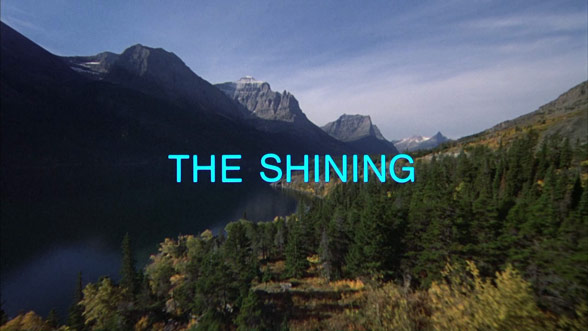
The Shining (1980)
I found the opening credit sequence for The Shining extremely boring. The credits themselves were the primary focus of the entire opening. The scene was of a car driving up to the place where the film will be taking place. The title itself also appears around half way through the sequence, but it doesn't do anything for this opening like the title did for the previous one I mentioned. The credits constantly moving does keep the audience somewhat engaged in what it going on, at least in how long it will go on for, so I don't think I'll do something like this. I want my credits to flow better with what it happening in my opening to not bore my audience because of my limited time. (watch here)

Insidious (2010)

Much like a Nightmare on Elm Street, this opening split it's credit sequence in two. However, Insidious took a different approach to it. The first set of credits are displayed on their own, in a red font fading away in a smokey effect. They are meant to be the audiences primary focus. As the sequence continues, a light appears on the screen revealing the directors name. Following this a short scene displays a character sleeping followed by the title and next set of credits. This is where this one differed from the first. The second set of credits were presented in black and white clips, meant to look like old film roll footage, in the same red font making them stand out. I liked the way that there was a moment in between to keep the audience wondering what the character had to do with the film. It gave them a piece without giving anything away. I liked the the credits were presented in a way that wouldn't make them visually boring - the smokey effect - to keep audiences watching. (watch here)

Overall, I liked various elements about the sequences I watched and took a lot of inspiration from them. A Nightmare on Elm Street did a great job in incorporating the credits into the scene while still keeping the audience engaged. Insidious was able to do this as well, but in a way that highlighted the credits on their own. I also liked the title placement for all the films I mentioned, which I think is a crucial element of a good opening. My research gave me a good understanding of what I liked and didn't like about different sequences and what I wanted to include in my own. 

Tuesday, February 4, 2025

Film Opening Research

For my project I need to create a film opening that fits into the genre I chose to work with. For that I had to research the different elements that make up a film opening for that genre. With my research I developed my understanding for the components of what a horror film opening actually needs to successfully convey the tone to the audience. 


Halloween (1978)
I've never seen Halloween before, but after watching the opening it made me want to continue. The plot twist at the end made the audience want to continue to understand why the character did what he did and how it will continue. The opening itself was not very fast paced. It was silent for the most part which created suspense for what the audience was assuming to be a climactic moment. The use of point of view shots for the majority of the opening created a sense of mystery for who we were following in the scene as well. This opening, like the ones I will mention later, did not include the credits in the opening itself, but I do think it did a good job of developing the elements of suspense and mystery that I want to incorporate into my own film opening. (watch the opening here)

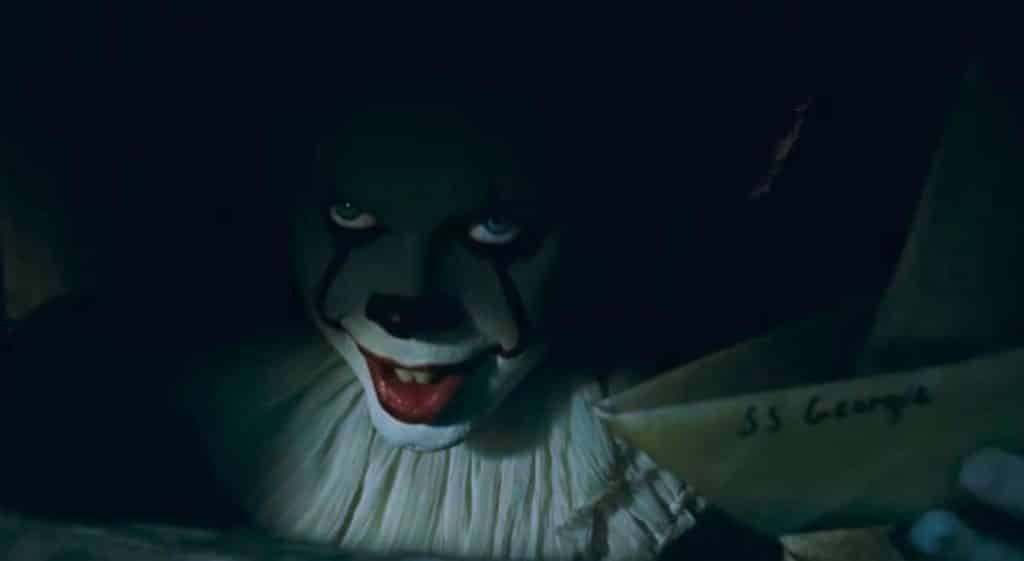
It (2017)
the opening for It, develops the characters in it's film very well. It introduces the antagonist, Pennywise, and other protagonists as well. The film opened with different sounds working together to bring in the setting they wanted to create. The rain was introduced before the film began to create an ambiance that helped set the tone. This is something I would like to include in my opening. The credits were included in the first part of the scene,  leaving the rest without distractions for the audience. I think that this opening developed the characters well while also introducing the conflict that will follow them in a mysterious way which I really liked. (watch the opening here)

After I watched my second opening, It, I started to realize that film openings in horror are a lot longer because they need to introduce the audience to the main conflict of the film. I realized it was going to be a lot harder to make a short 2 minute opening while still including everything that made a good horror opening, but I kept looking for different openings that could show me varying lengths. 

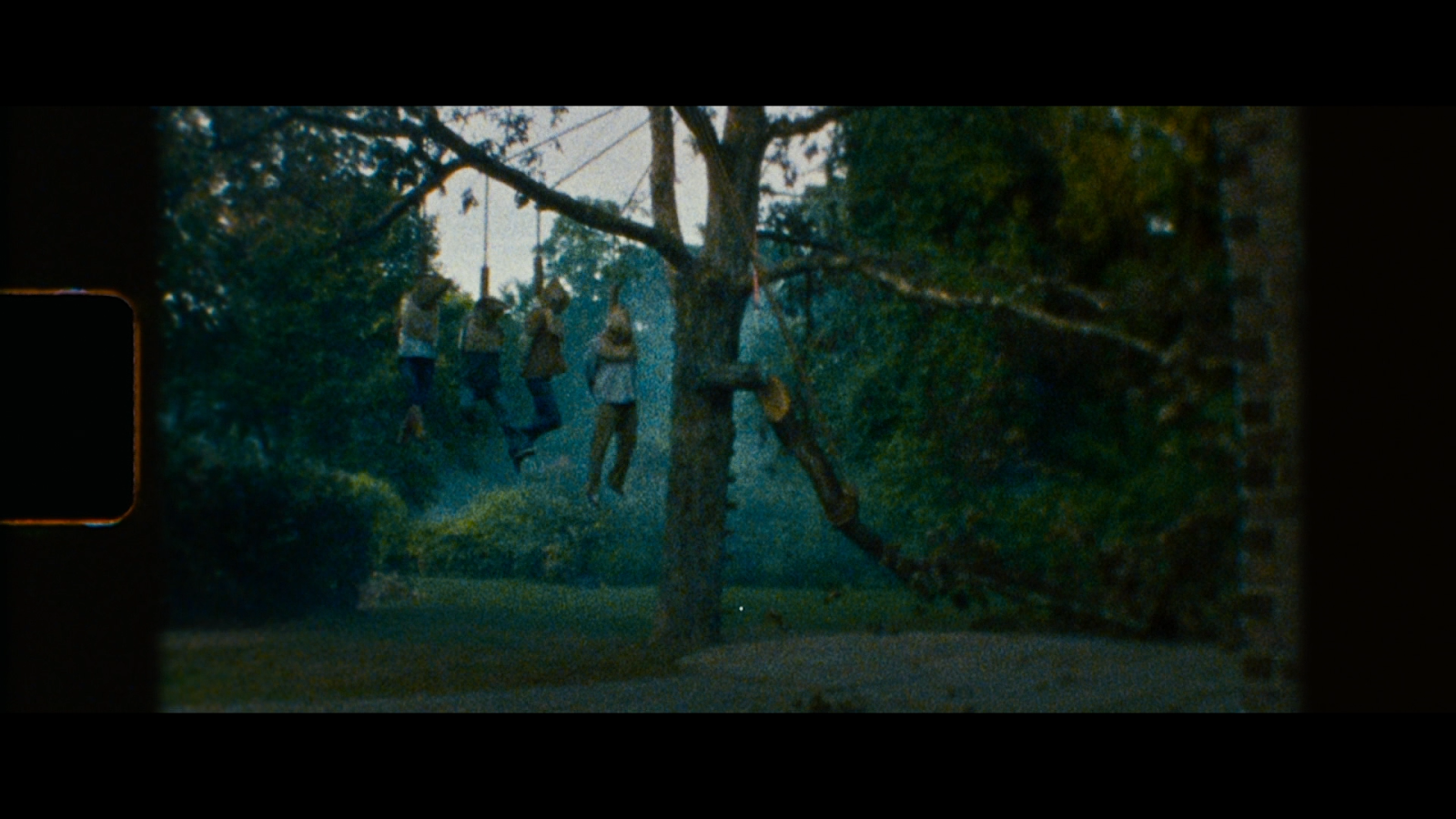
Sinister (2012)

Sinister's opening is a lot shorter than the opening of the other two films I looked at. This one is a lot simpler and leaves the audience with a greater sense of mystery. The editing is a key element of this opening. It is made to look like it is old footage, telling the audience this is something from the past. The title is added at the very end in a font that fits the overall theme of what it happening in the opening and fits in with the editing. I like that it matched with the rest of the opening and I think that it's an important think to note. 
(watch the opening here)

Overall, I liked the way all of these openings developed their tone with different techniques and I found different ones that I wanted to include. I like that they included the elements of suspense and mystery I was intending to include in my own and I found the use of sound in It to be very inspirational for my own opening. I liked that Sinister gave me an idea of what a shorter film opening could be for horror, because the other ones were a lot longer. It gave me a good idea of how I could use my time and how I could incorporate all the elements I want to. I think that this research really helped me better understand what I want to include in my own opening and how I will go about it. 

Film Opening & CCR Links!

Film Opening Click Here! CCR #1 Click Here! CCR #2  Click Here!